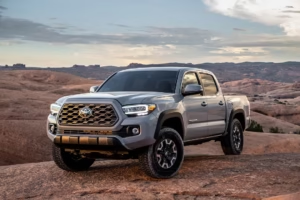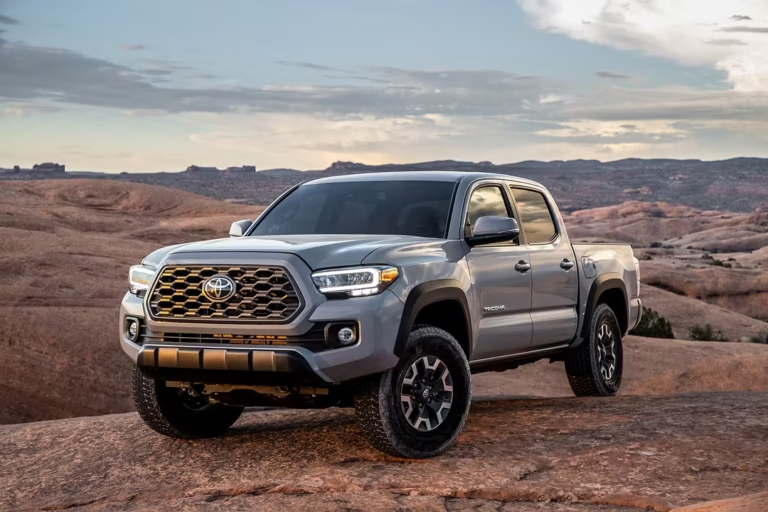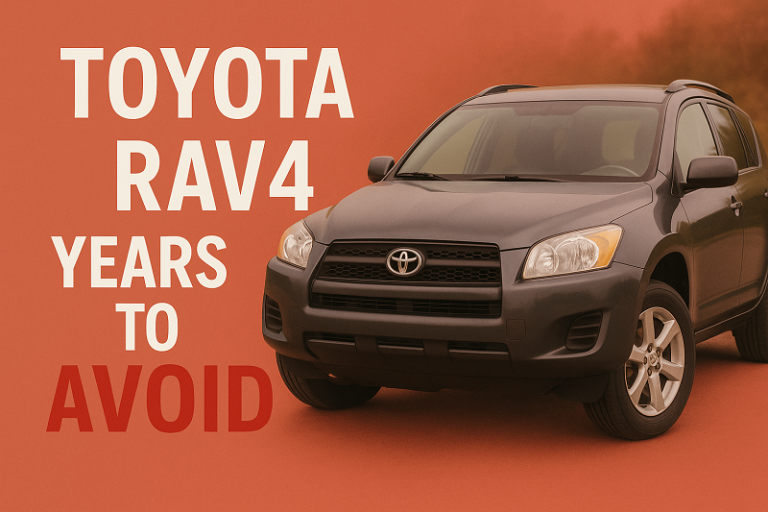
The Toyota Tacoma is celebrated for its toughness, off-road capability, and long-lasting resale value. But not every year delivers the same reliability. Some Toyota Tacoma years to avoid, such as 2005–2010 and 2016–2017, are notorious for issues like frame rust and transmission hunting, leading to costly repairs and frustrating ownership experiences.
Knowing the worst years for the Toyota Tacoma and the best year for the Toyota Tacoma models can make the difference between a dependable truck and one that drains your wallet. This 2025 guide highlights common Toyota Tacoma problems, the most reliable Tacoma years, and the best used Tacoma options to ensure your next pickup lasts 300,000+ miles with minimal stress.
Introduction
The Toyota Tacoma is celebrated for its toughness, off-road capability, and long-lasting resale value. But not every year delivers the same reliability. Some Toyota Tacoma years to avoid, such as 2005–2010 and 2016–2017, are notorious for issues like frame rust and transmission hunting, leading to costly repairs and frustrating ownership experiences.
Knowing the worst years for the Toyota Tacoma and the best year for the Toyota Tacoma models can make the difference between a dependable truck and one that drains your wallet. This 2025 guide highlights common Toyota Tacoma problems, the most reliable Tacoma years, and the best used Tacoma options to ensure your next pickup lasts 300,000+ miles with minimal stress.
History of Toyota Tacoma Generations
The complete timeline is essential for understanding the Toyota Tacoma’s best and worst years. Tacoma has four generations. Each one changed the design. Each one also switched engines and features. Reliability was also altered.
Rugged Simplicity (1995–2004) – First Generation
The first-generation Toyota Tacoma was built for reliability and simple work utility. With 2.4L and 2.7L inline-4 engines and a V6, it offered both manual and automatic transmissions. TRD off-road packages included locking differentials and skid plates.
Late first-generation models (2001–2004) are rust-free and often considered the best year Toyota Tacoma options for budget buyers. Early 1st-gen trucks can suffer from corrosion in salt-prone areas, making them a cautionary pick for Toyota Tacoma years to avoid.
Midsize Evolution (2005-2015) 2nd Generation
The second-generation Tacoma grew larger, more powerful, and more comfortable. With the 4.0L V6 producing 245 hp, towing up to 6,500 lbs, and improved TRD options, it became a versatile workhorse.
However, the early years (2005–2010) are considered the worst Tacoma years due to frame rust issues, which led to a costly multi-billion-dollar settlement. Later models (2013–2015) are the best years for the Toyota Tacoma, with refined reliability and minimal complaints.
Tech and Safety Focus (2016-2023) 3rd Generation
The third-generation Tacoma emphasised technology and safety. With 3.5L V6 engines and optional Toyota Safety Sense, these trucks improved comfort, efficiency, and off-road capabilities.
Early 3rd-gen models (2016–2017) are 3rd-gen Tacoma years to avoid because of transmission hunting and gear shudder, which can frustrate owners and require costly repairs. Models from 2018–2023 are more reliable, making them the most widely used Toyota Tacomas.
Turbocharged Modernity (2024-2025) Fourth Generation
The fourth-generation Tacoma introduces 2.4L turbo engines and i-FORCE MAX hybrid options, producing up to 326 hp and 465 lb-ft of torque. It comes with an advanced 8-speed automatic transmission and coil-spring rear suspension for better ride quality.
Early 2024 builds may require caution, but 2025 refinements have addressed most issues, offering modern performance, safety, and efficiency. These new trucks are suitable for buyers seeking the latest technology and are often considered the best year Toyota Tacomas in the 4th-gen lineup.
Key Features Across Toyota Tacoma Years
Powertrain and Performance
The Toyota Tacoma is known for its durable engines:
- 1st/2nd Gen: 4.0L V6 in the best year Toyota Tacoma models (2013–2015) offers smooth power and endurance.
- 3rd Gen: 3.5L V6 is fuel-efficient; early 2016–2017 trucks are Toyota Tacoma years to avoid due to transmission issues.
- 4th Gen: Turbo 2.4L and hybrid provide superior torque and efficiency, making 2025 trucks competent.
Off-Road and Utility Specs
TRD variants include locking differentials, skid plates, and Crawl Control—towing peaks at 6,800 lbs for V6-equipped trucks. Avoid the worst Tacoma years (2005–2010), where frame rust limits heavy-duty use.
Cabin and Infotainment Progression
From simple interiors in the first generation to Entune in the second, Toyota Safety Sense in the third, and 14-inch screens in the fourth, features have evolved significantly. Worst years for the Toyota Tacoma may have tech failures, while the best years for the Toyota Tacoma models are reliable.
Safety and Efficiency Ratings
From simple interiors in the first generation to Entune in the second, Toyota Safety Sense in the third, and 14-inch screens in the fourth, features have evolved significantly. Worst years for the Toyota Tacoma may have tech failures, while the best years for the Toyota Tacoma models are reliable.
Comparative Analysis: Best vs. Worst Toyota Tacoma Years
Direct head-to-head comparison clarifies choices—best years for the Toyota Tacoma shine in longevity/minimal issues; frequent, expensive failures burden worst Tacoma years.
Why the Best Years Excel
Best years (2013-2015, 2018-2023): Refined powertrains (bulletproof 4.0L/3.5L V6), resolved prior flaws, low NHTSA complaints (<200/year), high J.D. Power scores (80+/100), 300k+ miles common. Superior resale (60-70% retention), balanced features/reliability.
Why the Worst Years Fail
Worst years (2005-2010, 2016-2017): Redesign-induced defects—severe frame rust (2005-2010, multi-billion settlement), transmission hunting/shudder (2016-2017, erratic shifts). High complaints (1,000+/year), costly repairs ($2,000-$5,000+), safety risks (structural failure, delayed acceleration).
| Aspect | Best Years (e.g., 2013-2015, 2018-2023) | Worst Years (e.g., 2005-2010, 2016-2017) |
| Reliability Rating | High (few complaints, 300k+ miles) | Low (widespread defects, early failures) |
| Common Issues | Minor (routine maintenance) | Major (rust, transmission, recalls) |
| Repair Costs | Low ($400-600/year average) | High ($2,000+ frequent) |
| Resale Value | Excellent (60-70% retention) | Poor (rust/trans issues depress) |
| Owner Satisfaction | Very High (J.D. Power 85+) | Low (frustration from breakdowns) |
This comparison highlights prioritising the Toyota Tacoma’s best years for long-term value.
Toyota Tacoma Problems by Year (2025 Data)
Worst Tacoma Years
- 2005–2010: Frame rust, structural compromise, and high repair costs ($2,000–$5,000+).
- 2016–2017: Transmission hunting, gear shudder, and erratic shifts.
- Early 2024: Minor transmission refinements and tech glitches.
Most Reliable Tacoma Years
- 2013–2015: Proven best year Toyota Tacoma models; minimal complaints, bulletproof 4.0L V6.
- 2018–2023: Refined third-gen trucks; strong reliability and off-road capability.
- Late 1st Gen (2001–2004): Rust-free, durable budget options.
- 2025 4th Gen: Post-refinement turbo and hybrid models with modern tech.
Common Problems Across Eras
- Frame & Rust: Especially 2005–2010, repaired in later models.
- Transmission Issues: 3rd gen 2016–2017; minor early 4th gen glitches.
- Electrical & Infotainment: Screen freezes, sensor errors.
- Paint & Body: Peeling and corrosion in some early 2nd-gen trucks.
Maintenance Best Practices
Underbody treatments ($200/year), fluid services, and early inspections.
Alternatives for Risk-Averse Buyers
Ranger (power), Colorado (ride)—but Tacoma resale prevails in good years.
User Guide: How to Buy a Reliable Used Toyota Tacoma in 2025
This step-by-step guide helps you confidently buy a used Toyota Tacoma by minimising risk and steering clear of Toyota Tacoma years to avoid, while focusing on the most reliable model years.
Step 1: Define Your Needs and Budget
First, decide how you’ll use the truck—daily driving, off-roading, towing, or work duties.
- Daily drivers should prioritise comfort and fuel efficiency (late 3rd gen, 4th gen, or hybrids).
- Off-road buyers should look for TRD Off-Road or TRD Pro trims with locking differentials.
- Towing/hauling requires V6 models or the 2025 hybrid with a verified towing package.
Budget expectations (2025):
- $18k–$25k: 2013–2015
- $28k–$38k: 2018–2023
- $40k+: Low-mileage 2025 models
Always keep a 10–15% buffer for taxes and immediate maintenance.
Step 2: Choose the Right Years and Trims
Focus on proven, dependable years:
- Safer choices: 2013–2015, 2018–2023, rust-free 2001–2004, or refined 2025 models
- Avoid or inspect carefully: 2005–2010, 2016–2017, 2011–2012, early 2024 builds
Select trims based on usage (SR/SR5 for value, TRD trims for performance, Limited for comfort) and choose cab/bed size according to passenger and cargo needs.
Step 3: Search and Screen Listings Carefully
Use platforms like Autotrader, CarGurus, Cars.com, and dealer listings.
Filter for clean titles, mileage under 150k, and detailed underbody photos.
Ask sellers about rust exposure, service records, recalls, and ownership history.
Step 4: Check Vehicle History and Recalls
Run a full VIN report using CarFax or AutoCheck to review accidents, service gaps, and title issues.
Always confirm recalls through NHTSA and Toyota—especially important for the worst Tacoma years, which are affected by frame rust or transmission problems.
Step 5: Inspect and Test Drive Thoroughly
Inspect the frame for rust, check suspension components, and test all electronics.
During a test drive, look for transmission hesitation, steering vibration, or drivetrain shudder under city and highway conditions.
Step 6: Get a Pre-Purchase Inspection
A professional inspection is essential for trucks over 100k miles or from higher-risk years.
Have a mechanic focus on frame integrity, transmission behaviour, and suspension wear.
Step 7: Negotiate and Finalise the Dea
Use inspection results and market data to negotiate 5–10% below the asking price.
Secure financing beforehand, review paperwork carefully, and consider extended warranties only for borderline years.
Step 8: Post-Purchase Essential
Immediately replace fluids, address open recalls, and apply rust protection if needed.
Joining Tacoma owner forums can also help with maintenance tips and long-term care.
Advantages and disadvantages of owning a Toyota Tacoma
There are some strengths and trade-offs of owning a Toyota Tacoma. This overview relates a 2025 figure from Consumer Reports, J.D. Power, Kelley Blue Book, and forums maintained by their owners. Even in the most favourable years of the Toyota Tacoma, the advantages tend to outweigh the disadvantages for buyers who desire long life and heavy use.
Pros
Excellent Strength and Life Span
Tacomas are long-life models. A large portion reaches 300,000 to 400,000 miles in the best years for the Toyota Tacoma, including 2013-2015 bulletproof 4.0L V6 and 2018-2023 refined models—repair expenses average $478 annually, below the segment average.
Outstanding Resale Value
KBB and iSeeCars report best-in-class retention of 70 to 73% after five years. Used prices remain high due to strong demand.
High Level of Off-Roadability and Flexibility
TRD trims can be trail-ready. They can provide Crawl Control, locking diffs, Multi Terrain Select, and high clearance. The maximum towing weight is 6,800 lbs, and the payload is solid.
Effective Community and After-Sales Support
The owners have a huge fan base on Tacoma World and Reddit. Mods and maintenance parts are readily available.
In recent models, the modern features are present.
The 2024-2025 models include powerful turbo and hybrid power, up to 465 lb-ft. They also include large touch screens, Toyota Safety Sense 3.0, and enhanced comfort with coil-spring suspension.
Cons
Peril in Expensive Maintenance in Issue Years
Frame rust and transmission problems are the worst in the 2005-2010 and 2016-2017 Tacoma years, respectively. Costs for repairs can run $2,000 to $5,000+ in severe cases. There are also reports of transmission hesitation and electrical glitches in early 2024-2025 models.
Higher Purchase Price
Tacomas may be more expensive than competitors such as the Chevy Colorado or Ford Ranger. Top trim may exceed $60,000, and dealer markups may apply.
Non-Hybrids, Below Average Fuel Economy
The older gas-only models tend to achieve 18 to 21 mpg. Even non-hybrids of 2025 can be set at 20 to 23 mpg. About 24 mpg EPA is typical for hybrids, though lower numbers may be experienced under load.
Truck-Like Ride and Cabin Noise
Body-on-frame may be stiff, which is most common in leaf-spring models, and road and wind noise are felt. The rear seating is tight, and the road handling is not as smooth as the competitors.
Early Generation Teething Problems
Early-stage quality issues can be introduced in new redesigns, such as 2024-2025, reducing expected reliability until the refinements become operational.
Bottom line: The advantages will be more favourable to buyers who choose the most optimal years of the Toyota Tacoma and prefer durability, resale, and off-road capability over comfort or fuel efficiency. This is because it is more convenient to avoid its cons with smart year choice and consistent maintenance.
FAQs
- Which years of the Toyota Tacoma should be avoided?
2005-2010 (rust), 2016-2017 (transmission), and some early 4th gen.
- Best year Toyota Tacoma?
2015, well-polished and with fewer problems.
- Does this mean that 3rd-gen Tacoma years to avoid are all to be avoided?
No. 2016-2017 are the key culprits, and 2018+ is powerful.
- Anticipated solid Toyota Tacoma life?
300,000 to 400,000+ miles with regular care.
- Toyota Tacoma reliability outlook, 2025 Toyota Tacoma reliability outlook?
Improving, however, by following up on current data.
Conclusion
Toyota Tacoma remains a midsize standard, yet it needs smart year selection. Evade the most adverse years among Toyota Tacoma years to avoid (2005-2010 and 2016-2017) associated with rust and transmission issues. Select the most successful years of the Toyota Tacoma (2013-2015 and 2018-2023) that demonstrate strong durability. This 2025 contact guide supports Toyota Tacoma’s best and worst years searches, and your truck would be prepared for work and daily life.