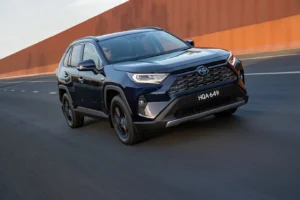
Enjoy impressive fuel efficiency and smooth hybrid performance—but early RAV4 Hybrid models sometimes faced major issues, such as Cablegate. Make the right choice and enjoy trouble-free driving with the best Toyota RAV4 Hybrid years.
Introduction
Dream of owning a Toyota RAV4 Hybrid that combines impressive fuel efficiency (around 41 mpg), 219 horsepower, standard all-wheel drive, and Toyota’s long-standing reputation for reliability—whether you’re a family driver, daily commuter, or eco-conscious buyer. While the RAV4 Hybrid delivers on these promises in many cases, not all model years offer the same ownership experience. Early hybrid versions, in particular, reported notable issues that frustrated owners and led to costly repairs.
By the end of 2025, the Toyota RAV4 Hybrid will have become one of the most dominant compact SUVs on the market, accounting for a significant share of overall RAV4 sales in the U.S. This popularity makes choosing the best year for the RAV4 Hybrid even more critical. To buy with confidence and avoid regret, buyers need a clear understanding of which RAV4 Hybrid years to avoid—and which ones stand out for long-term reliability.
This guide follows a clear, practical structure: it explains common problems in certain hybrid years (such as corrosion-related cable issues, software glitches, and fuel-system concerns), connects those problems to real-world ownership challenges like higher running costs and reduced efficiency, and then offers practical solutions. These include guidance on the best years to buy a Toyota RAV4 Hybrid and tips for maintaining a hybrid vehicle for long-term performance.
Rather than relying on hype, this analysis is supported by recent reliability data and owner-reported trends from trusted automotive sources such as Consumer Reports (CR), J.D. Power, NHTSA, and leading car-review platforms, as well as long-term owner experiences. Many buyers expected Prius-level dependability but were caught off guard by early design shortcomings, such as sealed components that trap moisture or fuel-system issues.
The good news is that Toyota addressed many of these concerns over time. From 2019–2020 updates onward—and especially in 2023+ models—RAV4 Hybrids consistently receive strong reliability ratings, frequently ranking near the top of the compact SUV segment.
Overview of RAV4 Hybrid Evolution and Reliability Trends
The Toyota RAV4 Hybrid debuted in 2016 with 194 hp, standard AWD, and a practical 69 cu ft cargo space. Early models (2016–2018) were mechanically sound but delivered slightly lower real-world mileage.
The 2019 redesign (second-generation hybrid on fifth-gen RAV4) improved power to 219 hp and efficiency to 39–41 mpg. However, 2019–2020 RAV4 Hybrid models faced reliability issues, including high-voltage cable corrosion (“Cablegate”) and fuel system quirks. Toyota responded with recalls and extended warranties, and post-2021 models saw significant improvements.
The 2021–2023 RAV4 Hybrid models continue this trend, with higher reliability scores and better owner satisfaction. Predicted 2024–2025 models rank highly, featuring redesigned cables, improved software, and minimal complaints.
Generation Comparison
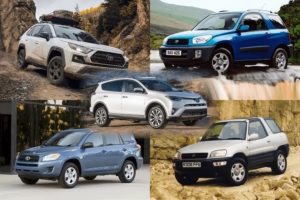
- First Generation (2016-2018): Solid debut with proven mechanicals, but limited to 34 mpg and occasional software glitches. Fewer severe issues than gas counterparts; many owners reach 200,000+ miles.
- Second Generation (2019-present): Significant upgrades in power (219 hp), efficiency (39-41 mpg), and tech. Early years (2019-2020) struggled with recalls and Cablegate; post-2021 models benefit from fixes, with 2023+ featuring redesigned open-style cable connectors to prevent moisture buildup.
5. Generation Comparison Table (Refined)
| Generation | Years | Reliability (CR/J.D. Power) | Key Strength | Notes |
|---|---|---|---|---|
| First Gen | 2016–2018 | 70–80 | Strong debut, low major failures | Minor software glitches, slightly lower MPG |
| Second Gen | 2019–2020 | 59–61 | Power & handling upgrade | Cablegate, fuel tank recalls |
| Second Gen (post-fix) | 2021–2023 | 61–83 | Reliability improved | Fixes applied, high owner satisfaction |
| Latest Gen | 2024–2025 | 80–86 (predicted) | Refined design, minimal issues | Redesigned cables, top-predicted reliability |
Telling the Problem: Major Issues in Problematic Hybrid Years
Early RAV4 Hybrid models faced unexpected issues. Cablegate caused corrosion of high-voltage battery cables, which could disable AWD and cost thousands to repair. Fuel tank design flaws limited range, and software glitches affected performance.
Owners in affected regions reported inconvenience and higher costs, highlighting why knowing the RAV4 Hybrid years to avoid is critical. Post-2021 models addressed these issues, restoring reliability and efficiency.
2016: Debut Growing Pains
As the first hybrid year, 2016 models experienced software calibration issues, occasional infotainment freezes, and slightly lower real-world mpg (often 32-33 vs advertised 34). While no widespread catastrophic failures occurred, these “teething problems” led to more frequent dealer visits than expected.
2019-2020: Peak Complaints and Cablegate
These years mark the highest complaint volumes. Cablegate affected vehicles in salt-belt states most severely, with corrosion sometimes appearing as early as 50,000 miles. Additional issues included fuel tanks that wouldn’t fill (reducing range by 2-3 gallons), battery drain from the Data Communication Module (DCM), and infotainment glitches. NHTSA logged hundreds of reports, and Toyota issued multiple recalls plus an extended warranty (8 years/unlimited miles, later expanded to 10 years/150,000 miles for some).
Emerging Minor Issues in 2025
Even the latest models aren’t flawless. Some 2025 owners report early 12-volt battery drain (requiring replacement within months), noticeable cabin/engine noise during acceleration, sluggish cold-weather performance, and occasional infotainment system connectivity drops. These are minor compared to earlier problems but are worth monitoring, especially in extreme climates.
Relating the Problem: How These Issues Impact Owners
Problems in early models affected hybrid efficiency and convenience. Owners reported additional service visits and higher running costs, which reduced the financial and environmental benefits of choosing a RAV4 Hybrid. Post-fix models, predominantly 2023+, restore confidence and predictable ownership.
Finding Solutions: Best Years and Mitigation Tips
The best years to buy a Toyota RAV4 Hybrid are 2021–2025.
- 2021–2023: Corrected Cablegate issues, strong CR reliability scores, 40+ mpg, and high owner satisfaction.
- 2024–2025: Redesigned components, minimal issues, predicted 86/100 reliability, and optimal hybrid performance.
User Guide: Best/Worst Hybrid Merge
Integrating RAV4’s best and worst years insights for hybrids: Skip problematic early years; embrace 2021+ for optimal long-term ownership and resale value.
Step-by-Step Buying Process
Set budget and needs (new $35k+, used $25k+).
Target safe years: focus on 2021+. Check VIN for warranty coverage on fixes.
Inspect thoroughly: undercarriage, battery health, and software updates.
Review history: recalls (NHTSA), Carfax service records.
Test drive: check EV-gas transitions, acceleration, and cabin noise.
Post-purchase: maintain the underbody and monitor hybrid systems.
Preventative Tips
Apply anti-corrosion spray for pre-2023 hybrids
Rinse the undercarriage in winter
Use a battery tender for infrequent driving
Advantages and Disadvantages of Toyota RAV4 Hybrid Models (Best Years)
Pros
- Excellent Fuel Economy: 39-41 mpg, which will save 500-800 dollars per year over gasoline.
- Good Power: 219 hp, 7.1-sec. 0-60, assured passing.
- Long-term Reliability: 200,000+ miles of typical post-repair miles. 10 years/150,000 hybrid battery warranty.
- Normal AWD: The Electronic on-demand system proves to be excellent in any condition.
- High Resale Value: Value not less than 60% in 5 years.
- Roomy and Utilitarian: 69 cu ft cargo, comfortable seating.
Cons
- Increased initial expense: between $2,000 and $4,000 money premium compared to the gas RAV4.
- Corrosion Risk (Pre-2023): It should be monitored during severe weather.
- Cabin/Engine Noise: It is perceived during hard acceleration.
- Tech Glitches: The infotainment can be laggy.
- Poor Access to the PHEV: There are often waitlists for Prime models.
- Ride: Firm: Heavier than other competitors.
FAQs
Best year for Toyota RAV4 Hybrid? 2023–2025 for the highest reliability and efficiency.
Years to avoid? 2016 and 2019–2020 (early hybrid issues).
Is 2025 reliable? Yes, predicted 86/100 CR with minor problems.
Is Cablegate fixed? Yes, redesigned connectors from 2023+. Extended warranties covered earlier models.
Hybrid vs Gas? Hybrid is more efficient, has better performance; gas is cheaper upfront.
RAV4 Prime PHEV worth it? Ideal for short-range EV driving, but at a higher cost and with limited availability.
Conclusion
Knowing which Toyota RAV4 Hybrid years to avoid and which models to choose ensures you get the full benefits of efficiency, reliability, and performance. Early problems (2016 software glitches, 2019–2020 Cablegate) caused owner frustration and extra costs, but post-2021 models fix these issues. Choose 2021–2025 for an optimal hybrid experience and long-term value, and maintain your vehicle to enjoy thousands of stress-free miles.