Have you ever asked yourself, “where is Hyundai made” or “where are Hyundai cars made”? The answer isn’t just one country — Hyundai operates a massive global network of factories spanning South Korea, the USA, Europe, India, and beyond. Understanding where your car is built not only satisfies your curiosity but also affects pricing, quality, and delivery times. Let’s dive into the world of Hyundai manufacturing and uncover exactly where Hyundai cars are made around the globe.
Introduction
When people search “where is Hyundai made” or “what country is Hyundai made in,” they’re looking for clarity on one thing: where does Hyundai build its vehicles and why does it matter?
Hyundai is a South Korean automotive giant, but it no longer builds all its cars in one place. Instead, it runs a global production network that includes manufacturing facilities across:
- Asia (South Korea, India, China, Indonesia)
- North America (United States)
- Europe (Czech Republic, Turkey)
- South America (Brazil)
This gives Hyundai major advantages: local supply, lower shipping costs, regional adaptation, and competitive pricing. It also influences ownership experience, such as warranty servicing, resale value, and American manufacturing perception — especially for those searching “Hyundai American made” or “is Hyundai made in USA.”
In this article, we’ll explore all major regions where Hyundai cars are made, including specific models like the Elantra, and explain how Hyundai operates one of the world’s most strategic automotive manufacturing networks.
Overview: Hyundai’s Global Manufacturing Strategy
Hyundai’s manufacturing philosophy is based on proximity to demand — building cars where people buy them. This reduces shipping costs, import tariffs, delivery times, and helps Hyundai adapt vehicles to local safety or emissions rules.
Global Production Goals
- Serve local markets efficiently
- Optimize cost and pricing
- Create regional employment
- Enable quick delivery and regional specs
The global network includes dedicated plants for multiple models, sometimes with variations tailored to local preferences — such as engine options or trim levels. This strategy is common among large automakers and keeps Hyundai competitive.
South Korea: Hyundai’s Original and Largest Manufacturing Hub
Ulsan Plant — The Heart of Hyundai Production
Hyundai’s main manufacturing base is in Ulsan, South Korea. This facility alone is one of the largest automotive complexes in the world.
Key Features:
- Covers more than 1,200 acres
- Produces over 1 million+ vehicles annually
- Houses multiple assembly lines
This plant builds a wide range of models for global export. Many of the cars Hyundai ships around the world — including to North America, Europe, Asia, and South America — originate here.
Key Models Built in Ulsan
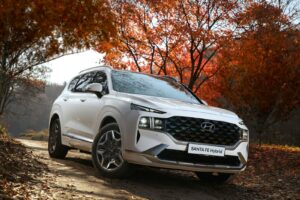
- Hyundai Santa Fe
- Hyundai Tucson (for export markets)
- Hyundai Sonata (regional variations)
- Hyundai Elantra (some export batches)
Why It Matters:
Ulsan is Hyundai’s engineering and quality benchmark — it sets standards followed by other plants globally. The experience and technology developed here help Hyundai maintain consistent quality worldwide.
United States: Hyundai Production for North America
When people search “is Hyundai made in USA”, the answer for many recent models is yes — Hyundai builds cars locally for the North American market.
Hyundai Motor Manufacturing Alabama (HMMA)
Located in Montgomery, Alabama, this is Hyundai’s largest U.S. production facility.
Key Capabilities:
- Produces up to 390,000 vehicles per year
- Equipped with stamping, body shop, paint shop, and final assembly
- Creates thousands of regional jobs
Popular Models Made in the U.S.
- Hyundai Elantra
- Hyundai Tucson
- Hyundai Santa Fe
- Hyundai Santa Cruz
This plant is designed to serve the USA, Canada, and Puerto Rico — reducing reliance on imports and improving local supply.
Hyundai Motor Group Metaplant America (HMGMA), Georgia
Hyundai’s electric vehicle manufacturing plant near Savannah, Georgia — focused on next-generation vehicles — represents a strategic shift toward EV production in the U.S.
Key Focus:
- EV platforms (IONIQ series)
- Production scalability up to 500,000 vehicles annually
- Works in close alignment with battery partners and supply chain nodes
Having U.S. assembly for electric and conventional vehicles strengthens Hyundai’s position in the fastest-growing automotive segment.
Europe: Regional Production for Local Demand
Europe’s automotive market is unique because of strict emissions standards, tax structures, and consumer preferences. Hyundai’s response has been dedicated regional plants.
Nošovice Plant (Czech Republic)
Hyundai builds vehicles here for Europe, the Middle East, and parts of Africa.
Features of the Plant:
- Located in the Czech Republic
- Produces models like the Hyundai i30 and Tucson
- Designed for European road and emissions requirements
Local production here means better adaptation to European regulations and reduced tariffs compared to imports.
Izmit, Turkey Plant
Turkey is another major Hyundai manufacturing site serving Europe and nearby regions.
What’s Produced in Turkey:
- Hyundai i10
- Hyundai i20
These compact models are especially popular in Europe and benefit from local production due to lower logistics costs and favorable trade agreements.
India: A Strategic Export and Domestic Hub
Hyundai has some of its most efficient manufacturing operations in India. The country not only serves local demand but also acts as a global export hub.
Features of Hyundai India Production
- Builds high-demand models like:
- Hyundai i20
- Hyundai Venue
- Hyundai Verna
- Hyundai Creta
- Exports to 70+ countries
- Highly cost-efficient manufacturing environment
Indian production is important because it combines high quality with lower labor and material costs — which allows Hyundai to remain price-competitive globally.
Other Hyundai Manufacturing Sites Around the World
China
While joint ventures with local Chinese partners produce Hyundai models in China, this market serves a massive local demand for both domestic drivers and regional export.
Brazil
Hyundai Motor Brasil produces models like the HB20 and Creta for South American markets, optimizing cost and reducing import taxes in a key growth region.
Indonesia
Hyundai’s manufacturing presence in Indonesia focuses on Southeast Asia, building models tailored to that region’s preferences and regulations.
Where Are Hyundai Elantras Made?
The Hyundai Elantra is one of the most searched models in this group. People ask “where are Hyundai Elantras made” and “where is the Elantra made?”
Answer:
- In the United States at HMMA (for North American markets)
- In South Korea’s Ulsan factory (for global export batches)
- In some markets, Elantras may be assembled regionally depending on local demand and trade agreements
This dual sourcing strategy allows Hyundai to reduce shipping time/cost and meet regional demand efficiently.
Key Features of Hyundai’s Global Manufacturing
Understanding where Hyundai makes its cars matters — but why the locations matter is even more important. Here are the most important features of Hyundai’s global production:
Global Reach, Local Efficiency
Hyundai’s strategy ensures that vehicles are built close to the customers who buy them — which:
- Reduces delivery time
- Lowers shipping and import fees
- Aligns vehicles with local regulations
Consistent Quality Standards
Even though production is spread globally, each factory follows the same quality protocols — from welding precision to final inspection — to ensure consistent quality worldwide
Competitive Pricing
Local manufacturing helps Hyundai keep costs down by avoiding import tariffs and taking advantage of local supply networks.
Regional Model Customization
Some markets prefer specific engines, trims, or features. Hyundai often tailors vehicle outputs from regional factories to meet those needs.
User Guide: How to Check Where Your Hyundai Was Made
H3 — Using the VIN Number
Your car’s Vehicle Identification Number (VIN) can tell you where it was assembled. Certain VIN digits correspond to specific manufacturing countries. For example:
- ‘1’, ‘4’, ‘5’ → USA
- ‘K’ → South Korea
- Others → Europe or other regions
Many online VIN decoders can interpret this for you.
Pros and Cons of Hyundai’s Global Manufacturing
Pros
- Lower costs and tariffs
- Faster delivery and customer service
- Region-specific models
- Local employment growth
Cons
- Perceived quality differences in some regions (customer reviews vary)
- Complexity in supply chain coordination
- Parts and servicing may vary slightly by region (specific components)
FAQs
- Where are Hyundai cars made?
Hyundai cars are manufactured worldwide — in South Korea, the USA, Europe, India, Brazil, China, and Indonesia.
- Is Hyundai made in the USA?
Yes. Many Hyundai models like the Elantra, Tucson, Santa Fe, and Santa Cruz are assembled in the U.S. at plants in Alabama and Georgia.
- Where are Hyundai Elantras made?
Elantras are typically made at Hyundai’s Alabama, USA plant for North America and at the Ulsan facility in South Korea for export markets.
- Does the country of manufacture affect quality?
All Hyundai plants follow rigorous global quality procedures, though regional customer experience and component sourcing may vary slightly.
Conclusion
When you search “where does Hyundai make their cars”, you discover a vast global network — with major hubs in South Korea, the U.S., Europe, India, and several other regions. Each plant is strategically placed to serve local demand, reduce cost, and comply with regional requirements.
This diversification helps Hyundai offer competitive pricing, quicker delivery, and models tailored to local needs — while maintaining quality and innovation across the entire lineup.
Understanding where your Hyundai was made also gives you insight into service options, resale value, and ownership experience — making you a smarter, more informed driver.